You walk outside expecting crystal-clear water, but your pool looks more like a bubble bath. Maybe there is a thin layer of white foam on the surface. Maybe bubbles are streaming from the return jets. Or perhaps the water looks fine until the pump starts running.
Foam and bubbles can look similar, but they do not always have the same cause. Surface foam is often linked to residues, organic contaminants or a chemical product. Continuous bubbles from the returns can point to a circulation or air-leak problem. Telling the difference is the first step towards a safe fix.
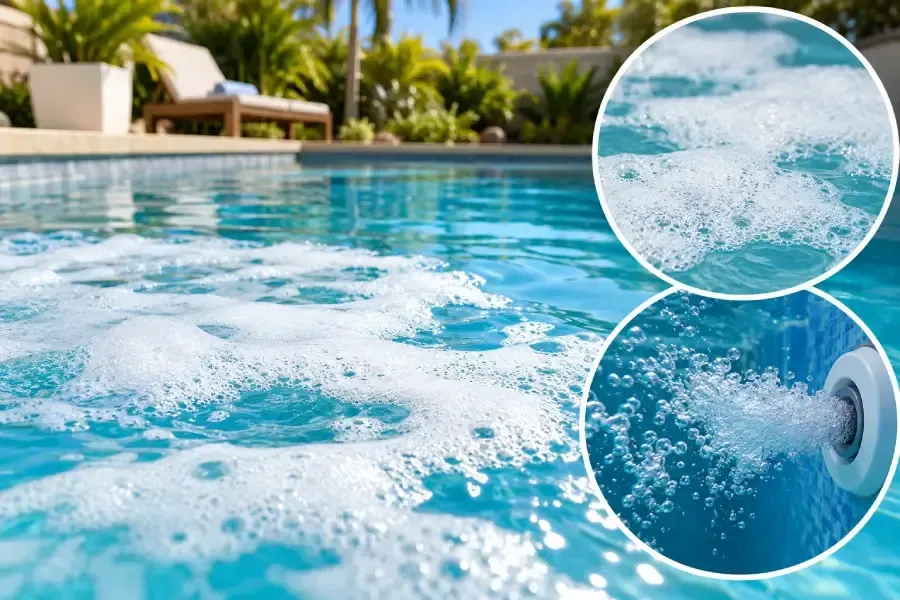
This guide explains why pool water becomes foamy or bubbly, what you can check at home, what not to do, and when to arrange professional pool water testing in Melbourne.
Quick answer: Pool foam is commonly caused by body products, detergent residue, organic contaminants, an unsuitable or overdosed algaecide, or unbalanced water. Bubbles that keep coming from the return jets are more likely to involve low water, restricted flow, lost prime or air entering the pump system.
First, is it foam or air bubbles?
Before adding anything to the water, watch what happens when the pump is switched off and then on again.
Signs you have surface foam
- A white or slightly coloured layer sits on the surface.
- The foam gathers near steps, corners, waterfalls or the downwind side of the pool.
- It becomes worse when swimmers enter, the cleaner runs or the water is agitated.
- It gradually reduces when the water is still.
Signs you have air bubbles in the circulation system
- Bubbles continue to come from one or more return jets.
- You can see air collecting under the pump lid.
- The pump sounds different, gurgles or repeatedly loses prime.
- Return flow is weak, surging or inconsistent.
- The pool water is below the middle of the skimmer opening.
A little aeration from a spa, fountain or water feature can be normal. The concern is persistent air, weak circulation or a pump that cannot stay full of water.
Common causes of foamy pool water
1. Shampoo, sunscreen, body oils and laundry residue
Swimmers bring more into a pool than they realise. Sunscreen, moisturiser, deodorant, hair products, cosmetics, sweat and detergent left in swimwear can all add organic residue to the water. When the water is agitated by swimmers, jets or a cleaner, those residues can create foam.
Think about what happened just before the foam appeared. Was there a busy pool day, a children’s party or a hot weekend? If the foam appears after heavy use and then improves with filtration and good water care, swimmer-introduced contaminants may be the main clue.
Safe fix: Ask swimmers to rinse before entering, keep the water properly sanitised, skim the foam and allow the filter to run according to the needs of your pool. If the water is cloudy, irritating or has a strong chemical smell, test it before anyone swims.
2. The wrong algaecide or too much of a chemical product
Some algaecides and treatment products can foam, particularly when the dose is too high or the product is not suitable for the pool system. This can be frustrating because the chemical may have been added to solve another problem, such as algae.
Check the product label and compare the amount used with the pool volume. Do not add another treatment simply because the foam is still visible. Some product-related foam reduces as the water is filtered and the chemical is diluted or used up, but the timing depends on the product and the amount added.
Safe fix: Stop adding unnecessary products, follow the label instructions, skim the surface and test the water. If you are unsure what has already been added, a professional test is safer than guessing.
3. Unbalanced water chemistry
Water can look reasonably clear while its chemistry is out of balance. If the sanitizer is not working effectively, organic contaminants can build up and contribute to foaming. Low calcium hardness may also make water more prone to foam, while incorrect pH and alkalinity can affect comfort, sanitation and equipment protection.
Do not chase one number in isolation. Pool water needs to be assessed as a system, including sanitizer, pH, alkalinity, calcium hardness and—depending on the pool—stabiliser and salt-related readings.
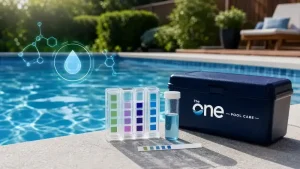
For a broader explanation of how alkalinity supports stable pool chemistry, read what pool alkalinity is and why it matters. If test-strip colours are confusing or different readings do not seem to match the water’s appearance, arrange on-site digital pool water testing.
4. High organic load, algae or dirty water
Foam can be a symptom of water that is carrying a heavy load of oils, debris, algae or other organic material. This is more likely after storms, long periods without maintenance, heavy use or a pool cover being left closed while the water quality declines.
Look for other clues: dull or cloudy water, a slippery surface, green or yellow tint, leaves on the floor, a blocked skimmer or a filter that has not been cleaned for some time.
If the pool is also green, do not treat foam as the main problem. Read The One Pool Care’s guide on what to check after adding chlorine to a green pool, or book green pool recovery in Melbourne if the water needs a controlled treatment plan.
Common causes of bubbles from the return jets
Low pool water level
If the water falls too low, the skimmer can draw air instead of a steady flow of water. That air may travel through the pump and appear as bubbles at the returns. Water loss may be caused by evaporation, splash-out or a leak, so topping up is only a short-term answer if the level keeps falling.
As a simple check, the water should generally sit around the middle of the skimmer opening. Avoid allowing the pump to run with inadequate water flow.
A blocked basket, skimmer or suction line
Leaves, hair and other debris can restrict the flow before water reaches the pump. The pump may then pull harder, lose prime or draw air through a weak seal.
Switch the pump off before checking or emptying the skimmer and pump baskets. If the problem continues, The One Pool Care’s guide to a pool pump running without proper circulation explains the next checks, including valves, filters, return jets and pump prime.
An air leak around the pump or suction side
Air can enter through a dirty or damaged pump-lid O-ring, a loose connection, a valve, a drain plug or another suction-side component. Unlike a water leak, an air leak may not leave an obvious puddle. You may instead notice bubbles under the pump lid, gurgling, surging returns or a pump basket that never fills completely.
Safe fix: Turn the pump off before inspecting accessible components. Clean and check the lid seal, confirm the lid is seated correctly and look for visible damage. Do not dismantle electrical or pressurised equipment if you are not trained to do so.
A dirty filter or incorrect valve setting
A dirty filter can restrict flow and change the pressure in the system. A valve left partly closed after cleaning or backwashing can also affect circulation. Check the filter pressure against its normal operating range and follow the manufacturer’s instructions for cleaning your cartridge, sand or DE filter.
If you are considering a replacement or need equipment advice, browse The One Pool Care’s pool filter range or ask the team to assess whether the issue is actually the filter, pump, valve or plumbing.
How to fix foamy pool water safely
- Keep swimmers out temporarily if the water is cloudy, irritating, strongly scented or not circulating correctly.
- Remove visible foam with a skimmer net so you can see how quickly it returns.
- Check the water level and keep it around the middle of the skimmer opening.
- Inspect and empty baskets with the pump switched off.
- Test the water rather than adding chemicals by guesswork.
- Review recent additions, including algaecide, clarifier, detergent-contaminated swimwear or other treatments.
- Run and clean the filter correctly according to the equipment manufacturer’s instructions.
- Watch the return jets and pump lid for continuing air bubbles, weak flow or loss of prime.
What not to do when your pool starts foaming
- Do not keep adding chlorine blindly. More chemical is not always the answer and can make testing more difficult.
- Do not pour household detergent, dishwashing liquid or other cleaners into the pool. They can worsen foaming and may damage the water balance.
- Do not ignore persistent air bubbles. They can indicate a flow restriction, low water level or suction-side air leak.
- Do not open a pressurised filter. Switch equipment off and follow the manufacturer’s safety procedure.
- Do not swim based only on appearance. Clear-looking water is not proof that the chemistry is safe.
How to prevent pool foam and bubbles in the future
Once the immediate problem is resolved, a few simple habits can reduce the chance of it returning:
- Encourage a quick rinse before swimming, especially after applying sunscreen or body products.
- Test pool water routinely and after heavy rain, parties or unusually high use.
- Keep the water level high enough for reliable skimmer operation.
- Empty baskets and inspect the equipment area regularly.
- Clean the filter on the correct schedule for its type and pool load.
- Use only suitable products and measure doses for the actual pool volume.
- Arrange regular pool cleaning and maintenance in Melbourne if testing, cleaning and equipment checks are difficult to keep up with.
Frequently Asked Questions (FAQs)
Conclusion
Foamy pool water is usually a clue rather than a problem to hide with another chemical dose. Start by deciding whether you are seeing surface foam or air bubbles in the circulation system. Then check recent swimmer activity and product additions, test the water, inspect the water level and baskets, and watch the pump and return jets.
If the foam keeps returning or bubbles are affecting circulation, professional testing can save time and prevent damage caused by guesswork. The One Pool Care provides mobile pool care across Melbourne, including digital water testing, regular maintenance, equipment checks and one-off pool cleaning.
Further reading: The causes and troubleshooting principles in this guide are consistent with guidance from Shenton Pumps’ pool-foam guide and Leslie’s guide to foamy pool water. Always follow the instructions for your own equipment and chemical products.